AUTHOR OF THE WEEK - DAY SEVEN
At 11 am, from our doorsteps and gardens, the nation will hold two minutes’ silence to mark the 75th anniversary of VE day today. Then we’ll sing We’ll Meet Again. For most reading this, those events in Europe happened before they were born. How important is it to look back in history? Can we learn from it and, thereby, improve our lives today?
When I wrote The Violinist’s Apprentice under the pen name Isabella Mancini, I was fascinated by the notion of going back in time and meeting someone who plucked at our heart strings so much that he’s still noted today. I wanted to explore how we, our language, our clothes and such technology as an iphone, might be received by an earlier European culture. Similarly, what would a young modern person make of the way of life back then? In my story, the tall girl who arrives in 17th century Italy, dressed in torn jeans, is initially taken for a boy. Here’s a description of what happened:
“A dark journey through time
On a group trip to Rome, musician Clementina is whirled back in time to 17th century Rome. Amidst court intrigue and creaking carriages, Italy becomes a chiaroscuro backdrop to her growing feelings for young violin-maker Antonio Stradivari. But people begin to notice just how ‘strange’ this young woman is. She must be a witch. Meanwhile, in present day Scotland, her brother suffers a life-threatening accident, and in an icy corner of the Arctic, a professor frets about global warming. Can Clementina find a way to return to the 21st century again?”
It’s interesting that, since the beginning of time, when confronted by someone ‘strange’, people react with evil intent. Why must those who are so brilliant as to invent something new or to have the prescience to help mankind always be threatened with death by the common populace? Surely such innovators should be lauded!
Grab your copy here: mybook.to/violinistsapprentice
Thank you everyone for taking this seven day literary journey with me, and thanks too to my publishers Crooked Cat/Dark Stroke Books for making it possible. Hope you’ve all enjoyed it. It would be great to read your review(s) of my books on Amazon. But, above all else on this special day in Europe - we’ll meet again!
AUTHOR OF THE WEEK - DAY SIX
Since 1883, a poem by Emma Lazarus was witting testimony to how America was viewed globally. ‘Give me your tired, your poor, your huddled masses yearning to breathe free..’ My own relative, aunt Babette, had cause to be very grateful as she arrived at Ellis Island aboard the Majestic in 1924. But, until her death at the age of 90, how much did the prevailing culture in bustling Brooklyn change her from that young, poor girl from Birmingham, England? And my own father, who lived in NY at the time of the financial crash in 1929 - what effect did his eight years over there have on him? I intended to find out. America seems to be in my blood, yet despite considering and undertaking considerable research about emigrating there, ultimately it never happened. Why? Nevertheless, our two adult children are each married to an American and they both live in Maine - that cold, most-northerly of the eastern seaboard States.
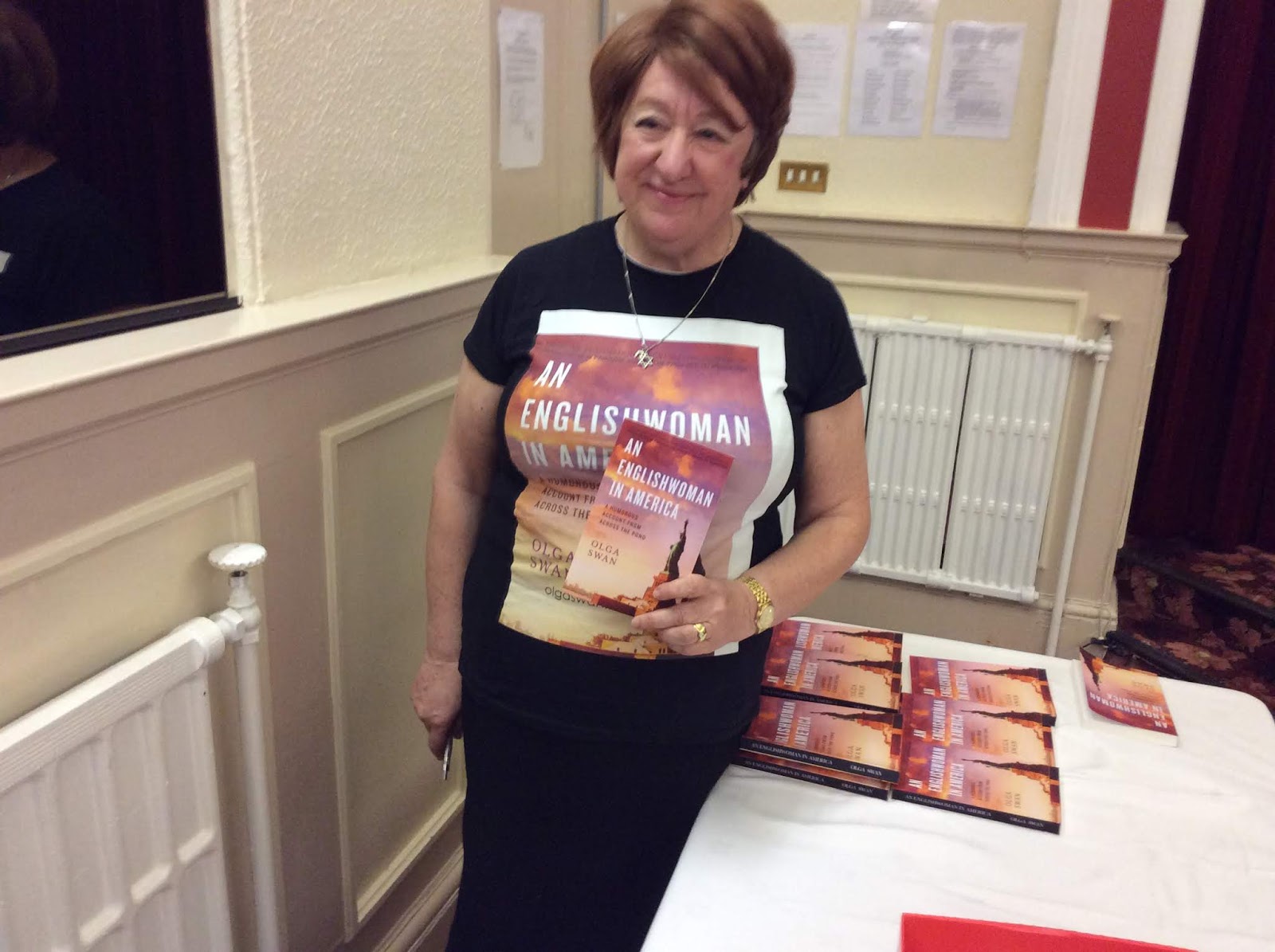
Time to study the essential differences between Britain and the US. An Englishwoman in America takes us on a humorous journey across America, studying the language, culture, humour, health, sport, government, gun laws, religion, patriotism and even sex. An essential read for everyone. Get your copy here: mybook.to/anenglishwoman
Since 1883, a poem by Emma Lazarus was witting testimony to how America was viewed globally. ‘Give me your tired, your poor, your huddled masses yearning to breathe free..’ My own relative, aunt Babette, had cause to be very grateful as she arrived at Ellis Island aboard the Majestic in 1924. But, until her death at the age of 90, how much did the prevailing culture in bustling Brooklyn change her from that young, poor girl from Birmingham, England? And my own father, who lived in NY at the time of the financial crash in 1929 - what effect did his eight years over there have on him? I intended to find out. America seems to be in my blood, yet despite considering and undertaking considerable research about emigrating there, ultimately it never happened. Why? Nevertheless, our two adult children are each married to an American and they both live in Maine - that cold, most-northerly of the eastern seaboard States.
Time to study the essential differences between Britain and the US. An Englishwoman in America takes us on a humorous journey across America, studying the language, culture, humour, health, sport, government, gun laws, religion, patriotism and even sex. An essential read for everyone. Get your copy here: mybook.to/anenglishwoman
AUTHOR OF THE WEEK - DAY FIVE
They say that, as with some marriages, a 7-10 year ‘itch’ can sometimes occur after you’ve moved to another country. For us, the first few years in France were idyllic and we never wanted to leave. We loved the sunshine, the peace, the open roads and, of course, le bien manger. The first inklings came after I suffered the shock of losing my two brothers within two years of each other. I now realise that I wasn’t able to grieve properly, but looking back, the date of their passing started the first seeds of doubt. We were also getting old and - rather like poet Rupert Brooke - neither of us could envisage being buried in a ‘foreign’ field. Then came Brexit.
From Paradis to Perdition is the sequel to best-selling Pensioners in Paradis. It is taken from my own chronological blogs whilst living in France, but written in a quirky ‘Him indoors’ style. It follows our progression from happily living in France until, bit by bit, things changed. I recognised that, much as I loved France the country, the people can be rather cold and insular compared to the English and the Americans. Fortunately, however, I still cherish the close friendship made with a remarkable French couple living in a nearby village. Merci Gerard and Monique.
Here’s what this book’s about:
What on earth could have happened to change their joie de vivre and their love of all things French? Did they hit that je ne sais quoi that essentially divides the French from the English? Or was it that dratted Brexit referendum that threw a spanner in the works? We all want to know! So, draw up a chair, pour a tot of whisky or a glass of (French) wine and enjoy the fine art of self-disparagement as all will be revealed - exactly how it happened.
Here’s the buy link: mybook.to/fromparadistoperdition
They say that, as with some marriages, a 7-10 year ‘itch’ can sometimes occur after you’ve moved to another country. For us, the first few years in France were idyllic and we never wanted to leave. We loved the sunshine, the peace, the open roads and, of course, le bien manger. The first inklings came after I suffered the shock of losing my two brothers within two years of each other. I now realise that I wasn’t able to grieve properly, but looking back, the date of their passing started the first seeds of doubt. We were also getting old and - rather like poet Rupert Brooke - neither of us could envisage being buried in a ‘foreign’ field. Then came Brexit.
From Paradis to Perdition is the sequel to best-selling Pensioners in Paradis. It is taken from my own chronological blogs whilst living in France, but written in a quirky ‘Him indoors’ style. It follows our progression from happily living in France until, bit by bit, things changed. I recognised that, much as I loved France the country, the people can be rather cold and insular compared to the English and the Americans. Fortunately, however, I still cherish the close friendship made with a remarkable French couple living in a nearby village. Merci Gerard and Monique.
Here’s what this book’s about:
What on earth could have happened to change their joie de vivre and their love of all things French? Did they hit that je ne sais quoi that essentially divides the French from the English? Or was it that dratted Brexit referendum that threw a spanner in the works? We all want to know! So, draw up a chair, pour a tot of whisky or a glass of (French) wine and enjoy the fine art of self-disparagement as all will be revealed - exactly how it happened.
Here’s the buy link: mybook.to/fromparadistoperdition
AUTHOR OF THE WEEK - DAY FOUR
Fifteen years ago today, Him indoors and I did the most extraordinary thing. We sold up, packed up everything, switched off the lights and said goodbye to England. What on earth could have induced us to do such a thing? Sometimes in life we all reach that fork in the tree of life where a decision has to be made, the consequences of which can be far-reaching. But emigration - could you do it?
Pensioners in Paradis was published by Crooked Cat Books in 2017. I set out to write a non-fiction book but written in a readable, factional style, chronicling exactly what happened to us in 2005. I had no idea of the impact my book would bring. To date, over 800,000 pages have been read, it’s a 4-times international best-seller and it’s currently my publisher’s third best-seller of all time.
Ask any writer and they’ll all say the same thing. It’s impossible to predict what will catch the public’s attention. I’m fortunate that the combination of the inherent comedy and the idea of running away from life did appeal to readers. Here’s what the book’s about:
Humour is a joyous thing. It enables us to recognise the ridiculous and to empathise with life’s disasters. Take the lives of a self-deprecating couple from England, steeped in life’s troubles, and whisk them across the Channel. Laugh with them as they encounter hilarious situations en France - from troublesome workmen, the infamous bureaucracy and even sex a la francaise! Take notes on this transition from English doom and gloom to la belle vie francaise and follow the exploits of this oh-so-recognisable English couple. What could possibly go wrong?
For those who haven’t read it yet, here’s the buy link. It’s a welcome break from today’s troubles. mybook.to/pensionersinparadis
Fifteen years ago today, Him indoors and I did the most extraordinary thing. We sold up, packed up everything, switched off the lights and said goodbye to England. What on earth could have induced us to do such a thing? Sometimes in life we all reach that fork in the tree of life where a decision has to be made, the consequences of which can be far-reaching. But emigration - could you do it?
Pensioners in Paradis was published by Crooked Cat Books in 2017. I set out to write a non-fiction book but written in a readable, factional style, chronicling exactly what happened to us in 2005. I had no idea of the impact my book would bring. To date, over 800,000 pages have been read, it’s a 4-times international best-seller and it’s currently my publisher’s third best-seller of all time.
Ask any writer and they’ll all say the same thing. It’s impossible to predict what will catch the public’s attention. I’m fortunate that the combination of the inherent comedy and the idea of running away from life did appeal to readers. Here’s what the book’s about:
Humour is a joyous thing. It enables us to recognise the ridiculous and to empathise with life’s disasters. Take the lives of a self-deprecating couple from England, steeped in life’s troubles, and whisk them across the Channel. Laugh with them as they encounter hilarious situations en France - from troublesome workmen, the infamous bureaucracy and even sex a la francaise! Take notes on this transition from English doom and gloom to la belle vie francaise and follow the exploits of this oh-so-recognisable English couple. What could possibly go wrong?
For those who haven’t read it yet, here’s the buy link. It’s a welcome break from today’s troubles. mybook.to/pensionersinparadis
AUTHOR OF THE WEEK - DAY THREE
This Friday will be the 75th anniversary of VE Day. Some liken the Corona virus to wartime, but unlike that joyous day in 1945 when everyone was dancing in the streets, will there ever be an end to the virus? Rather like a train idling somewhere down the tracks, the insidious danger will always be there, lurking.
And yet, despite everything, like Agatha Christie I’ve always loved locomotives. There’s something about the churning wheels and rushing wind that adds excitement to any journey. Couple this with a daring escape plan and you have the makings of a spine-chilling novel.
That’s what we should do to take our minds off things. In the lead up to VE Day, let’s remember how well this country did in the war. Yesterday I talked about 1938 Germany and 1942 Vichy France. Not so much has been written about what happened in Poland back then.
Welcome to The Mazurek Express, where I’ve used my love of trains to effect a sense of release from stress. I’ve used the Polish word Mazurek to evoke the swirling dance-like rhythm of the locomotive wheels.
It’s 1943 and our Birmingham protagonist is sent to Warsaw on his most dangerous mission yet: to help those trapped in the ghetto. However, despite heroic efforts, he finds himself herded into a cattle car heading for the notorious Treblinka concentration camp. As the heavy wheels churn, everyone is in peril.
This is a story about German-occupied Poland, the courage of the inmates of the Warsaw ghetto, and how a mighty locomotive acts as a catalyst for salvation of the spirit.
The Mazurek Express is available here: mybook.to/themazurekexpress
This Friday will be the 75th anniversary of VE Day. Some liken the Corona virus to wartime, but unlike that joyous day in 1945 when everyone was dancing in the streets, will there ever be an end to the virus? Rather like a train idling somewhere down the tracks, the insidious danger will always be there, lurking.
And yet, despite everything, like Agatha Christie I’ve always loved locomotives. There’s something about the churning wheels and rushing wind that adds excitement to any journey. Couple this with a daring escape plan and you have the makings of a spine-chilling novel.
That’s what we should do to take our minds off things. In the lead up to VE Day, let’s remember how well this country did in the war. Yesterday I talked about 1938 Germany and 1942 Vichy France. Not so much has been written about what happened in Poland back then.
Welcome to The Mazurek Express, where I’ve used my love of trains to effect a sense of release from stress. I’ve used the Polish word Mazurek to evoke the swirling dance-like rhythm of the locomotive wheels.
It’s 1943 and our Birmingham protagonist is sent to Warsaw on his most dangerous mission yet: to help those trapped in the ghetto. However, despite heroic efforts, he finds himself herded into a cattle car heading for the notorious Treblinka concentration camp. As the heavy wheels churn, everyone is in peril.
This is a story about German-occupied Poland, the courage of the inmates of the Warsaw ghetto, and how a mighty locomotive acts as a catalyst for salvation of the spirit.
The Mazurek Express is available here: mybook.to/themazurekexpress
AUTHOR OF THE WEEK - DAY TWO.
Yesterday I wrote about the novel which drew on my university career. Today I highlight the two novels which were released together in 2016 by Crooked Cat publishers. Each of these drew heavily on my Jewish heritage, my home city of Birmingham and my inner angst over what happened during the Holocaust. I wanted to show, first, what life was like for Jewish people in the years before WWII, and then the secret world of the Vichy government in 1942 France.
LAMPLIGHT. Spanning the years from 1912 to 1938, David Klein is 18 when he runs away from the poverty of his orthodox home for the bright lights of NY. From the terror of a near-drowning at sea, the story moves between NY, Birmingham and Breslau, where he lives through the burgeoning terror of Nazi Germany in 1938
VICHYSSOISE. Set in 1942, David Klein is on a mission to find a missing triple spy in SW France. Set against the historical, true background of Vichy France, the story shows an explosive Adolf Hitler and an irascible Winston Churchill, culminating in Pétain’s nail-biting trial for treason.
Whilst writing Vichyssoise, I was living in the tiny village of Varen, where I had volunteered to man the tourist office/bibliotheque. This proved very useful as I was afforded the opportunity to do research from original French texts about Pétain. In 2017, I was delighted to welcome my publishers in person, chez-nous, and guess what I prepared for lunch? Vichyssoise soup a la maison!
You can read the second editions of both books here. mybook.to/lamplight. mybook.to/vichyssoise
Yesterday I wrote about the novel which drew on my university career. Today I highlight the two novels which were released together in 2016 by Crooked Cat publishers. Each of these drew heavily on my Jewish heritage, my home city of Birmingham and my inner angst over what happened during the Holocaust. I wanted to show, first, what life was like for Jewish people in the years before WWII, and then the secret world of the Vichy government in 1942 France.
LAMPLIGHT. Spanning the years from 1912 to 1938, David Klein is 18 when he runs away from the poverty of his orthodox home for the bright lights of NY. From the terror of a near-drowning at sea, the story moves between NY, Birmingham and Breslau, where he lives through the burgeoning terror of Nazi Germany in 1938
VICHYSSOISE. Set in 1942, David Klein is on a mission to find a missing triple spy in SW France. Set against the historical, true background of Vichy France, the story shows an explosive Adolf Hitler and an irascible Winston Churchill, culminating in Pétain’s nail-biting trial for treason.
Whilst writing Vichyssoise, I was living in the tiny village of Varen, where I had volunteered to man the tourist office/bibliotheque. This proved very useful as I was afforded the opportunity to do research from original French texts about Pétain. In 2017, I was delighted to welcome my publishers in person, chez-nous, and guess what I prepared for lunch? Vichyssoise soup a la maison!
You can read the second editions of both books here. mybook.to/lamplight. mybook.to/vichyssoise
CROOKED CAT AND DARKSTROKE AUTHOR OF THE WEEK - DAY ONE: HOW IT ALL BEGAN
Crooked Cat Books and Darkstroke publishing have been putting one of its authors in the spotlight every week lately. This week, starting today, it's my turn. As I’ve been lucky enough to have had seven books published by them, it seems appropriate to remember one each day.
Is writing a way of releasing our past?
Book 1.
It was 2013 and Him indoors and I had been living in a tiny medieval village in SW France. Ever since I’d taken early retirement from the University of Birmingham after thirty years of blood, sweat and tears, I’d wanted to write a novel using some of my experience of working behind the scenes in the corridors of power. For a novel in the crime genre to be successful, I knew that it needed to comprise action, believable characters, a familiar setting – such as a university campus - and hopefully a page-turning story. This story would especially appeal to alumni, current students and their families.
So, 3rd Degree Murder was born. A prestigious vice-chancellor receives two formal complaints just before he’s due to retire. The underlying theme weaves a potent, cultural mix between a Muslim PhD student and a Jewish secretary. They both work for the same hated professor. Also embroiled in the intrigue are a family at war with modern society, two disgruntled lecturers, a vice-chancellor with a secret and a crazy office cleaner. So, in the end, who actually killed Professor Axel Sloan?
But how in the French countryside was I to find a good publisher? A friend told me in 2014 that Crooked Cat Books were just about to have an ‘open window’ for manuscript submissions. Fortunately, their website was easy to find, I attached my precious mss and, before long, I received a lovely email from them with the wonderful words “We’re delighted to offer you a contract….”
Readers can now buy this second edition of 3rd Degree Murder here: mybook.to/3rddegree
Subscribe to:
Posts (Atom)